The colors of literature - Giallo
Yellow, simply

Allô Police hid behind convenience store counters, wedged between the cigarettes and the beer. Garish covers, crime scene photos, headlines that didn’t mince words. In Quebec from the 1950s to 2000, it embodied a slightly shameful fascination: crime as spectacle, death as entertainment. You bought it discreetly. You read it avidly.
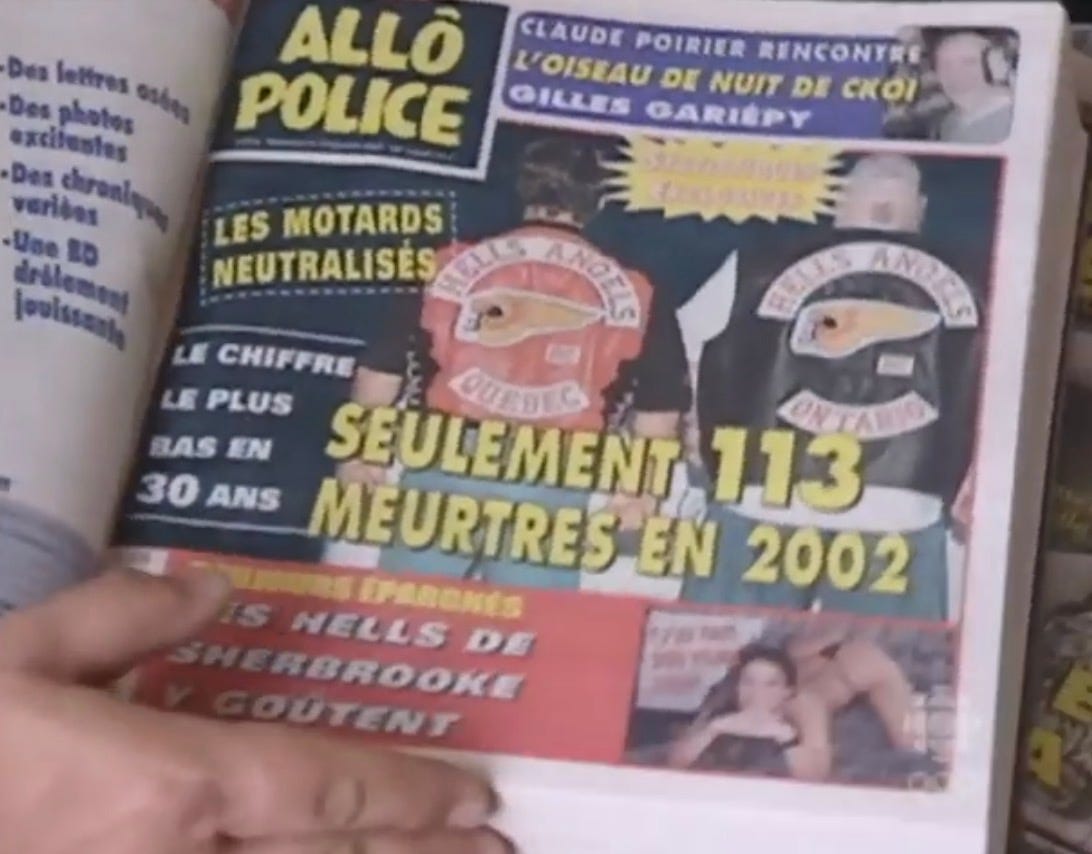
Allô Police was what’s known as a yellow press publication. The expression comes from late nineteenth-century America and describes a popular, sensationalist press that relied on scandal and crime to sell. Across the Atlantic, in 1929, the Italian publisher Mondadori launched a series of detective novels with bright yellow covers. Il Giallo Mondadori would become so popular that the word giallo, yellow, simply, would come to designate an entire literary genre, and then a cinematic one.
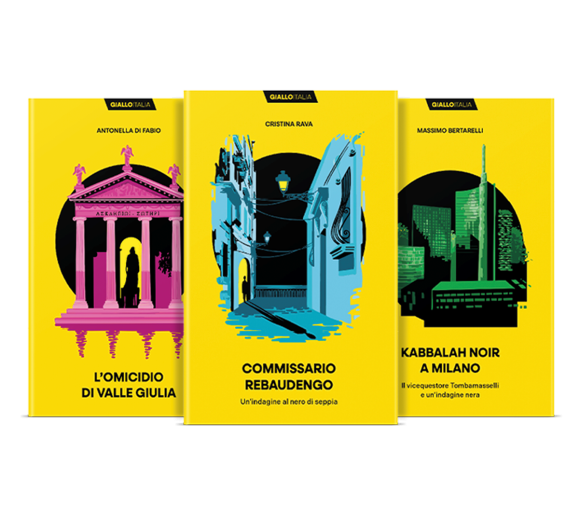
No direct connection between the two. The Americans didn’t inspire Mondadori, and Mondadori didn’t inspire the American tabloid press. And yet the same yellow imposed itself on both sides of the Atlantic to designate the death drive : those scenes we watch despite ourselves, those descriptions we devour because they remind us we’re alive. Two cultures, two eras, one point of attraction, a colour that changes form to keep working on the same zone.
Yellow is a deeply ambivalent colour. The colour of the sun and of gold, but also the colour of betrayal and marginality: traitors and heretics were made to wear yellow in the Middle Ages; it was imposed on Jews under the Occupation. A colour that marks, that exposes, that singles out those we look at differently.
Nature has known this far longer. The yellow of wasps, poison dart frogs, and snakes is aposematism, a strategy that warns while making it impossible to look away. Elsewhere, the same yellow becomes seduction: in certain birds, it attracts as much as it signals. Always this double address: come closer, but at your own risk.
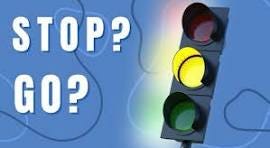
This idea of warning was carried over into traffic lights.
The yellow light is the suspended instant between the permitted and the forbidden. Neither the red’s stop nor the green’s permission. It is the moment when something in us chooses to accelerate, and that something resembles the death drive.
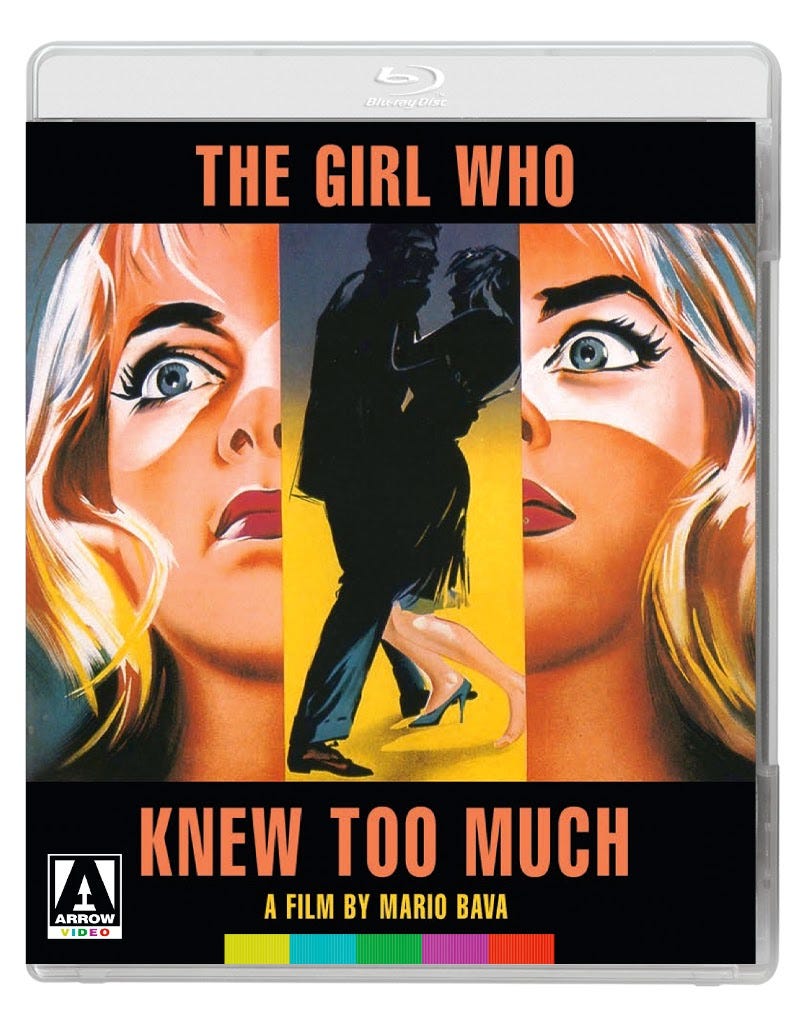
Italian cinema understood this before anyone else: it is in that suspended space between the permitted and the forbidden that something essential about us is revealed. Mario Bava begins this transformation in 1963 with The Girl Who Knew Too Much, a thriller with a refined aesthetic, where violence is staged with choreographic precision. Dario Argento then pushes the formula to its extreme. His murder sequences are genuine visual set pieces, drenched in saturated light, accompanied by the hypnotic music of Goblin. In Suspiria, the colours are pushed so far they become abstract, red, blue, and everywhere that yellow bathing the murder scenes like a warning we have chosen to ignore. What once hid behind a convenience store counter now fills the screen, claimed, unashamed.
The sordid becomes almost art.
Almost.
That is where the giallo disturbs and fascinates in equal measure. It takes violence seriously as aesthetic material, neither condemning nor glorifying it. It looks. Slowly. Carefully.
Allô Police did the same thing, in its way. Less elegantly, certainly. But with the same fundamental appetite: crime rendered in images, offered to the gaze of the reader who wonders, turning the page: what does it say about me, this desire to see?
The fascination doesn’t change. From the convenience store to the screen, from the blurry photograph to Argento’s meticulous frame: the schadenfreude remains beneath the varnish.
The yellow traffic light. We know. We accelerate anyway.
More colours